Every few summers, the “is a tomato a fruit or a vegetable” debate resurfaces somewhere on the internet, usually settled with the same tidy line: botanically a fruit, culinarily a vegetable. Case closed, or so it seems — until someone points out that cucumbers, squash, and green beans are all in exactly the same botanical boat, and nobody calls those “secretly fruit.”
Now push the question one step further. Nobody hesitates over strawberries and watermelon. They’re sweet, they show up in the dessert course, they sit in the fruit aisle. Surely those two are safely, unambiguously fruit — right? And is “botany says fruit, but everyone treats it as a vegetable” really the whole story, or is there a third, fourth, even fifth answer once government paperwork gets involved?
This post is a fact-check for entertainment, not legal, tax, or medical advice. Consult a qualified professional before acting on any of it.
QUESTION
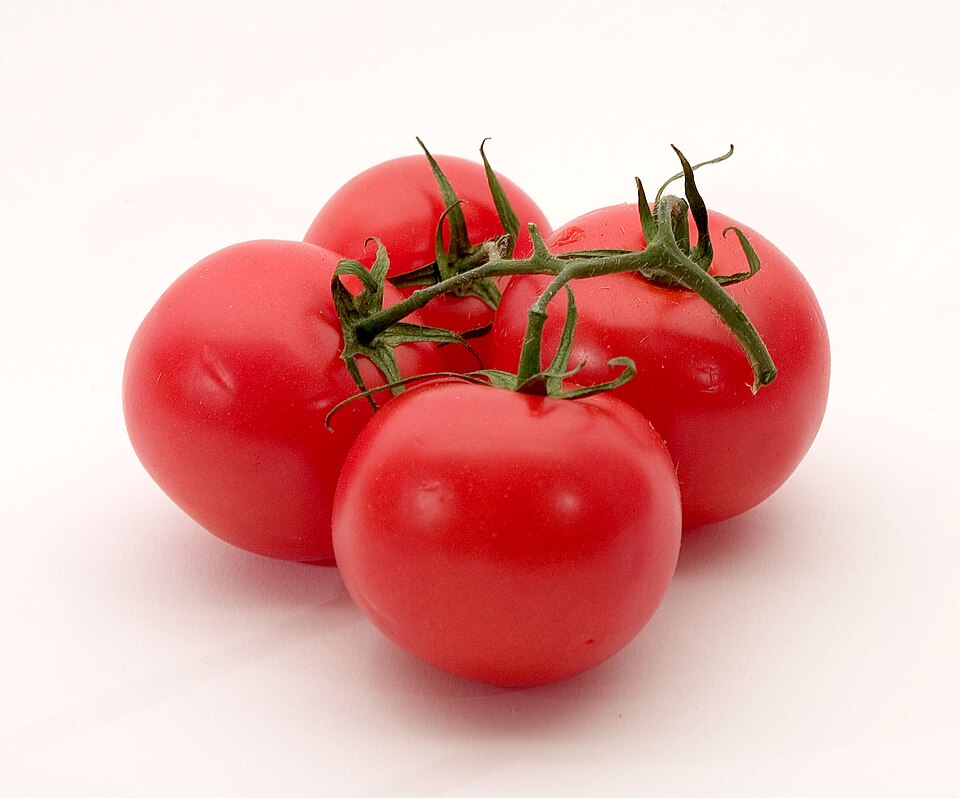
“Botanically a fruit, but a vegetable in the kitchen” is the standard answer for the tomato, and a lot of people already know it. Applied to a tomato, that line does real work — nobody eats a tomato for dessert.
But strawberries and watermelon break that logic immediately. Nobody treats them as savory kitchen ingredients. They’re sweet, they close out a meal, they’re stacked next to the apples and oranges at the store. So does calling them “fruit” mean the same thing botany means by “fruit” — or something else entirely? And once you set aside the neat “botany vs. the kitchen” framing, what do the other systems that actually classify produce for a living — agricultural statistics, customs schedules, tax law — have to say?
Four things are worth checking, in order. First, how botany actually defines “fruit,” and what that definition does to tomatoes, cucumbers, strawberries, and watermelon. Second, whether agriculture uses a different yardstick than botany. Third, how a legal system handles this in practice — and here the United States offers the cleanest case study, because the question once went all the way to the Supreme Court. Fourth, whether a single government can even agree with itself — and here Korea turns out to be the more interesting test case, because two of its own regulations classify the same crops differently. Every regulation cited below is quoted to establish what it actually says about strawberries and watermelon, not as advice on how to file anything.
CHECK
Botany’s answer: if an ovary matures around a seed, it’s a fruit — full stop
Botany’s definition of “fruit” is narrower and more mechanical than the word’s everyday use. The Encyclopaedia Britannica defines it, in the strict botanical sense, as “the ripened ovary of a flowering plant” together with the seeds it contains.[1] The ovary here is the pouch-shaped structure inside a flower that holds the ovules — the parts that become seeds after fertilization. Once fertilization happens, that ovary swells and becomes the fruit.
Nothing in that definition mentions taste, culinary use, or which meal course something belongs to. It only asks one question: did this structure develop from a fertilized ovary? Applying that question honestly produces a longer, stranger list than the usual dessert-tray examples. Britannica’s own list of fruits runs from apricots, bananas, and grapes straight through to bean pods, corn kernels, tomatoes, cucumbers, and acorns.[1] Tomatoes and cucumbers grow from the spot where a flower used to be and hold seeds inside — so they qualify. By the same logic, eggplants, squash, peppers, watermelon, and strawberries are all fruit too, because each one develops from a fertilized flower and carries seeds. Lettuce and spinach leaves, carrot and radish roots, by contrast, are not fruit under this definition no matter how central they are to the plant — they grow from leaf or root tissue, never from a flower’s ovary.
So the popular “tomato is botanically a fruit, but the kitchen treats it as a vegetable” line is only half right. Tomatoes aren’t a special case — cucumbers, squash, eggplants, peppers, strawberries, and watermelon are all in the identical position. Botany, in fact, has no category called “vegetable” at all. It only distinguishes fruit from non-fruit, and non-fruit further into roots, stems, and leaves.
Agriculture’s answer: woody plant or herbaceous plant — and a compromise category called “fruit-vegetables”
So where does “vegetable” actually come from, if not botany? The word is a working distinction from horticulture (the applied science of growing and tending crops) and farming practice, not from plant science. Purdue University’s Department of Horticulture and Landscape Architecture defines olericulture — the branch of horticulture concerned with vegetable growing — as the study of “herbaceous plants” (plants with soft, non-woody stems) “used in the kitchen,” and its course materials group edible roots like carrots, edible stems like asparagus, edible leaves like lettuce, and edible flower buds like cauliflower right alongside “edible fruits” such as tomatoes.[2]
That phrase — “edible fruits” — is the whole trick. Horticulture and agricultural practice separate botanical fruit from “vegetable” along an entirely different axis than botany does. Where botany asks “did this grow from a fertilized ovary,” agriculture asks “is this plant a woody perennial that you’d call an orchard crop, or a soft-stemmed field crop grown as an annual or herbaceous perennial.” Apples and pears, hanging off actual trees, are fruit; tomatoes, cucumbers, and strawberries, hanging off soft field-crop stems, are botanically fruit but get sorted with the vegetables anyway. Strawberries complicate the tidy woody/herbaceous split a little, since their stems persist through winter as a herbaceous perennial — but by the “does it grow on a tree” test, they still land on the vegetable side, not the orchard side.
This practical need is exactly what produced a compromise category: “fruit-vegetables” (Korean agricultural statistics use the term 과채류, literally “fruit-eaten vegetables”) — crops that are botanically fruit but are grown, harvested, and counted the way field vegetables are. The next section shows exactly how that category gets used once real government paperwork is involved — starting with the country where this question actually reached a court of law.
The United States’ answer: even the Supreme Court admitted to a double standard
The tomato question didn’t stay a dinner-table argument in the United States — it went to the Supreme Court. In 1886, importer John Nix brought a shipment of tomatoes into New York from the West Indies. Under the Tariff Act of 1883, the collector at the Port of New York, Hedden, charged Nix a duty reserved for “vegetables,” even though “fruit” was exempt from that same tariff schedule. Nix sued for a refund, arguing that a tomato is, scientifically speaking, a fruit.
In 1893, the Supreme Court ruled against him in Nix v. Hedden. The opinion is unusually direct about the science: “Botanically speaking, tomatoes are the fruit of a vine, just as are cucumbers, squashes, beans, and peas. But in the common language of the people, whether sellers or consumers of provisions, all these are vegetables.”[3] The Court did not dispute the botanical fact at all. It held instead that a tariff statute has to be read using ordinary commercial and everyday language, not scientific vocabulary — and by that standard, a tomato belongs with potatoes, carrots, and cabbage as something eaten as part of a meal, not as a dessert.
What makes this ruling worth remembering is that it lets a scientific fact and a legal conclusion sit side by side without contradiction, in the same paragraph. The Court agreed “botanically, this is a fruit” and ruled “legally, this is a vegetable” in the same breath. That’s not the Court being sloppy — it’s the Court pointing out that botany and law are answering two different questions, so both answers can be “correct” and still disagree. Keep that structure in mind, because it’s about to reappear inside a single government, applied not to one crop but to two.
Korea’s answer: two arms of the same government disagree with each other
Here is where the “different questions, different answers” pattern stops being a science-versus-law story and becomes something stranger — a case where two regulations issued by the same government, for adjacent purposes, sort the identical crops into opposite bins.
The first regulation is South Korea’s Agricultural Statistics Survey Regulation (농업통계조사규칙), issued by the Ministry of Agriculture, Food and Rural Affairs to standardize how crop statistics are collected. Its official schedule, “Classification of Crops” (Article 2), published on Korea’s National Law Information Center, sorts crops into a three-tier hierarchy of major, middle, and minor categories. Under the major category “vegetables” (채소), the middle category “fruit-vegetables” (과채류) lists, verbatim: “watermelon, oriental melon, cucumber, squash (sweet and common), tomato (regular and cherry), strawberry, eggplant, melon, and bell pepper (including paprika).”[4] Under this regulation, watermelon, tomato, and strawberry are all filed under the major category “vegetables.” This “fruit-vegetable” designation isn’t just an academic label — it shows up in Korea’s own government statistics. Statistics Korea’s national statistical portal, KOSIS, publishes an official table titled “Vegetable Production (Fruit-Vegetables),” where watermelon and strawberry are counted as a sub-line of vegetable production, not fruit production.[5]
Now turn to tax law, and the answer flips. Korea’s Value-Added Tax Act, Article 26, Paragraph 1, Item 1, exempts the supply of “unprocessed foodstuffs” from VAT, and delegates the exact scope of that exemption to the VAT Act Enforcement Decree, Article 34.[6] That decree in turn delegates the detailed classification to a Ministry of Economy and Finance ordinance — the VAT Act Enforcement Rule — whose Article 24, Paragraph 1 and Schedule 1, “Classification Table of Tax-Exempt Unprocessed Foodstuffs,” actually assigns each item. This schedule organizes produce by tariff heading number under the Harmonized System (HS), the internationally standardized commodity classification code used in customs schedules worldwide.[7]
Item 4 of that schedule, “Fruits,” lists HS heading 0807 as covering “melons (including watermelons) and papayas.”[7] In plain terms: under this tax schedule, watermelon is filed, by name, as a fruit — the exact opposite of its “vegetable” classification under the Agricultural Statistics Survey Regulation.
Strawberry’s case is subtler. Read all the way through the “Fruits” item on that same schedule, and the word “strawberry” never appears directly. What does appear is HS heading 0810, a catch-all labeled “other fruit,” folded into the same “Fruits” category.[7] What that 0810 heading actually covers can be confirmed independently: under the World Customs Organization’s Harmonized System, HS subheading 0810.10 (the six-digit tariff line beneath heading 0810) specifically designates fresh strawberries,[8] and Korea Customs Service’s own tariff-schedule portal (CLIP) confirms that 0810.10 covers fresh strawberries in Korea’s domestic tariff table as well.[9] So even though the word “strawberry” is never spelled out in the tax schedule’s text, tracing its tariff heading number leads straight back to Item 4, “Fruits.”
Tomato, meanwhile, sits in the same schedule’s Item 5, “Vegetables,” where HS heading 0702 covers “tomatoes (fresh or chilled only)” by name.[7] So for tomato, the two regulations agree: vegetable under the farm-statistics rule, vegetable under the tax schedule.
That’s the full picture. Tomato is “vegetable” (fruit-vegetable) under the Agricultural Statistics Survey Regulation and “vegetable” under the VAT Act Enforcement Rule — the two regulations agree. Watermelon and strawberry are “vegetable” (fruit-vegetable) under the farm-statistics rule but “fruit” under the tax schedule — the same government, working from two regulations that arguably share a broader agricultural policy purpose, checked opposite boxes for the same two crops.
This isn’t a clerical slip. The Agricultural Statistics Survey Regulation classifies by growing method — field crop versus orchard crop — because that’s what agricultural statistics need to track. The VAT Act Enforcement Rule simply imports an international tariff-code system that was never designed with Korean farm-statistics categories in mind. The two rules aren’t answering the same question, so there’s no reason to expect the same answer. And the reason watermelon and strawberry landed under “fruit” in the international tariff system in the first place traces back — much like Nix v. Hedden — to Western produce-trade and customs conventions built around “sweet, dessert-course produce,” a commercial habit of mind rather than a botanical one. Even inside one country’s own bureaucracy, the answer still depends on what the classification is for.
A bonus twist: the strawberry isn’t even “one real fruit,” botanically speaking
Set the vegetable-or-fruit question aside for a moment — strawberries have one more botanical surprise buried in them. The red, fleshy part of a strawberry never developed from an ovary at all. The small yellow specks scattered across its surface are each an independent, genuine fruit — an achene, a small dry fruit that encases a single seed — and the juicy red part everyone calls the “fruit” is actually the swollen receptacle, the tissue at the tip of the flower stalk that normally just holds the flower’s parts together.[10] Botanists classify the strawberry as an accessory fruit for exactly this reason: it is fruit, technically, but the part people eat isn’t the ovary tissue at all — it’s the surrounding structure the real fruits (the achenes) are studded across. Strawberries, in other words, manage to be popularly fruit, half-vegetable-half-fruit by regulation, and — strictly speaking — mostly not-fruit-at-all in the part you’re actually eating, with the genuine fruit reduced to tiny specks on the surface.
Watermelon deserves its own footnote too. Botanically, it belongs to a fruit type called a pepo — a fruit that develops from a single compound ovary (multiple ovaries fused together) and forms a hard outer rind, a category that also includes cucumbers and squash.[11] Pepos are often discussed alongside “berries” in botanical terminology, but many sources treat them as distinct from a true berry like a grape or tomato precisely because of that hard rind. Depending on how broadly “berry” gets defined, some classifications do fold pepo in as a berry subtype — so rather than flatly stating “watermelon is not a berry,” the more accurate summary is that it depends on where you draw the definition’s boundary.
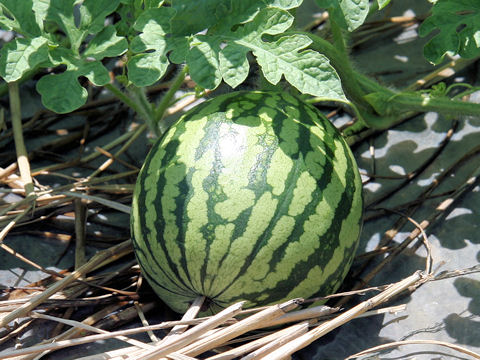

Putting it together: “fruit-vegetable” is a compromise that papers over a conflict
Here’s the shape of the whole picture. Botany treats anything that grows from a fertilized ovary and holds seeds as fruit — full stop. By that standard, tomatoes, cucumbers, eggplants, squash, peppers, watermelon, and strawberries are all fruit. Horticulture and farming practice add a second, entirely different axis on top: does it grow on a woody tree, or on a soft-stemmed field crop? Tree-grown means fruit; field-grown means vegetable, regardless of the botanical answer. The category invented to paper over that clash is “fruit-vegetable” — botanically fruit, but bureaucratically filed with the vegetables because it’s grown like one.
And even that compromise doesn’t hold together within a single government. Korea’s Agricultural Statistics Survey Regulation sorts watermelon and strawberry as vegetables based on how they’re grown. Korea’s VAT Act Enforcement Rule sorts the same two crops as fruit, simply because it borrows an international tariff-code system wholesale. Neither regulation is wrong. They were never trying to answer the same question in the first place — which is exactly what the U.S. Supreme Court discovered with a single tomato, more than a century earlier.
FACT
There is no single correct line between “fruit” and “vegetable.” Botany draws it at the ovary and calls tomatoes, cucumbers, watermelon, and strawberries all fruit in one group. Horticulture and farming practice draw a second line at tree versus field crop. And even the compromise category built to reconcile those two lines — “fruit-vegetable” — isn’t applied consistently within a single government: Korea’s Agricultural Statistics Survey Regulation classifies watermelon and strawberry as vegetables (fruit-vegetables), while Korea’s VAT Act Enforcement Rule classifies the same two crops as fruit.[4][7] Tomato is the one crop both regulations agree on: vegetable, in both.
Back in 1893, the U.S. Supreme Court had already reached the same kind of split verdict for a single vegetable garden’s worth of produce — “botanically a fruit, but legally a vegetable” — and treated both halves as simultaneously true, at different layers.[3] So the next time someone insists “watermelon is obviously fruit, no question,” the correct move is to hand them two different pieces of government paperwork: one says vegetable, the other says fruit, and both are official. And strawberries carry a bonus fact that has nothing to do with either debate — the red part everyone eats isn’t technically the fruit at all — which should improve your odds of winning the argument regardless of which side you’re arguing.

| Crop | Botany | U.S. tariff law (Nix v. Hedden, 1893) | Korea: Agricultural Statistics Survey Regulation | Korea: VAT Act Enforcement Rule, Schedule 1 |
|---|---|---|---|---|
| Tomato | Fruit | Vegetable | Vegetable (fruit-vegetable) | Vegetable (HS 0702) |
| Watermelon | Fruit | — | Vegetable (fruit-vegetable) | Fruit (HS 0807, filed under “melons”) |
| Strawberry | Fruit (though the edible flesh is an accessory tissue) | — | Vegetable (fruit-vegetable) | Fruit (HS 0810, the tariff subheading for strawberries) |
How botany, U.S. tariff case law, and two separate Korean regulations classify the same three crops. Original chart, CC0 (sources: [1][3][4][7][8][9])
References
[1]: Encyclopaedia Britannica, “Fruit” (plant reproductive body), https://www.britannica.com/science/fruit-plant-reproductive-body
[2]: Purdue University Department of Horticulture and Landscape Architecture, “Olericulture – Vegetable Growing,” HORT410 Vegetable Crops course materials, https://web.ics.purdue.edu/~drhodes/hort410/genint/ge00001.htm
[3]: Nix v. Hedden, 149 U.S. 304 (1893), Cornell Law School Legal Information Institute, https://www.law.cornell.edu/supremecourt/text/149/304
[4]: Ministry of Agriculture, Food and Rural Affairs (Korea), Agricultural Statistics Survey Regulation (농업통계조사규칙), Schedule, “Classification of Crops” (Article 2), amended Nov. 16, 2015, Korea National Law Information Center, https://www.law.go.kr/LSW/flDownload.do?gubun=&flSeq=156683157&bylClsCd=110201
[5]: Statistics Korea, KOSIS national statistical portal, “Vegetable Production (Fruit-Vegetables)” (채소생산량(과채류)), https://kosis.kr/statHtml/statHtml.do?orgId=101&tblId=DT_1ET0027
[6]: Value-Added Tax Act (Korea), Article 26 (Exemptions for Supply of Goods or Services), Paragraph 1, Item 1, and VAT Act Enforcement Decree, Article 34 (Scope of Unprocessed Foodstuffs, etc.), Korea National Law Information Center, https://www.law.go.kr/법령/부가가치세법/제26조
[7]: Ministry of Economy and Finance (Korea), VAT Act Enforcement Rule (부가가치세법 시행규칙), Schedule 1, “Classification Table of Tax-Exempt Unprocessed Foodstuffs” (Article 24, Paragraph 1), amended Dec. 27, 2023, Korea National Law Information Center, https://www.law.go.kr/flDownload.do?gubun=&flSeq=157549901&bylClsCd=110201
[8]: World Customs Organization, Harmonized System Nomenclature, Chapter 8 “Edible fruit and nuts,” heading 08.10 “Other fruit, fresh,” subheading 0810.10 “Strawberries,” https://www.wcoomd.org/-/media/wco/public/global/pdf/topics/nomenclature/instruments-and-tools/hs-nomenclature-older-edition/2002/hs-2002/0208e.pdf
[9]: Korea Customs Service, Customs Law Information Portal (CLIP), HS classification and tariff schedule lookup (subheading 0810.10), https://unipass.customs.go.kr/clip/index.do?opnurl=/hsinfosrch/openULS0201002Q.do — Korea’s domestic tariff schedule, part of the Customs Act’s basic tariff table, follows the international HS (WCO convention) exactly through its six-digit subheadings.
[10]: Science Notes, “Is a Strawberry a Berry? Why the Answer Is Surprisingly No,” https://sciencenotes.org/is-a-strawberry-a-berry-why-the-answer-is-surprisingly-no/
[11]: California State University, Long Beach, Department of Geography, “Fruits and Seeds” (GEOG 330 course materials, definitions of berry and pepo), https://home.csulb.edu/~rodrigue/geog330/fruitsseeds.html